NAD+ — Pen
Nicotinamide adenine dinucleotide (NAD+, CAS 53-84-9) — endogenous coenzyme involved in glycolysis, the citric acid cycle and the mitochondrial respiratory chain. Investigated in longevity research in the context of PARP enzyme activity, sirtuin signaling and age-associated NAD+ decline (Verdin, Science, 2015; Rajman et al., Cell Metab, 2018). For biochemical and cell biology research only — not for human use.
Free shipping from 199 €
Shipped from the EU (Czech Republic)
External reports for the tested samples (opens at Janoshik). More under Test reports.
FOR RESEARCH USE ONLY. This product is intended exclusively for laboratory and research purposes. Not for human or animal consumption, not a medicinal product or food.
NAD+ (nicotinamide adenine dinucleotide; CAS no. 53-84-9; molecular weight 663.4 g/mol) is a universal coenzyme found in virtually all living cells. As a central hydride acceptor in glycolysis, the citric acid cycle, and the mitochondrial respiratory chain, NAD+ is involved in maintaining cellular energy metabolism. In addition, NAD+ serves as a substrate for several classes of enzymes that are being intensively investigated in cell biology research fields.
Research fields and evidence
NAD+ and the biology of aging: In 2015, Verdin published in Science (DOI: 10.1126/science.aac4854) a widely cited review documenting age-associated changes in intracellular NAD+ concentration in animal models. The author describes the role of NAD+ as a substrate for sirtuins (SIRT1–7), NAD+-dependent deacetylases that are investigated in the regulation of DNA repair, mitochondrial biogenesis, and stress responses.
PARP enzymes: NAD+ serves as a substrate for poly(ADP-ribose) polymerases (PARPs), which play a role in the DNA damage response and genome stability. In 2018, Rajman, Chwalek, and Sinclair summarized in Cell Metabolism (DOI: 10.1016/j.cmet.2018.02.011) preclinical and early clinical findings on NAD+ precursor molecules and discussed pharmacological approaches to modulating NAD+ metabolism.
Studies on NAD+ precursors: In 2018, Yoshino, Baur, and Imai summarized in Cell Metabolism (DOI: 10.1016/j.cmet.2017.11.017) findings on NMN (nicotinamide mononucleotide) and NR (nicotinamide riboside) as NAD+ precursor molecules. Clinical studies exist for precursor molecules (NMN/NR); these concern other substances and are not transferable.
Compound characterization
- Full name: β-nicotinamide adenine dinucleotide (oxidized form)
- CAS number: 53-84-9
- Molecular formula: C₂₁H₂₇N₇O₁₄P₂
- Molecular weight: 663.4 g/mol
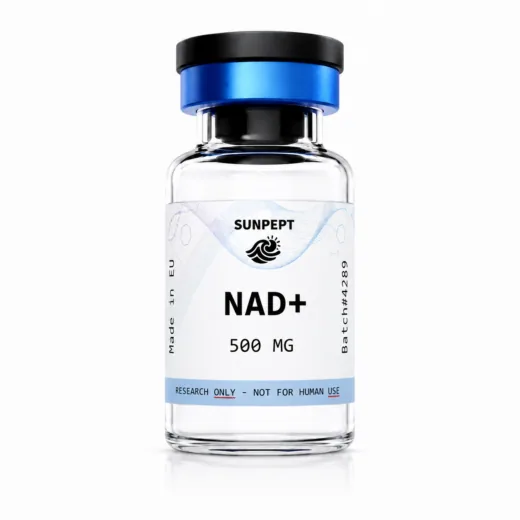
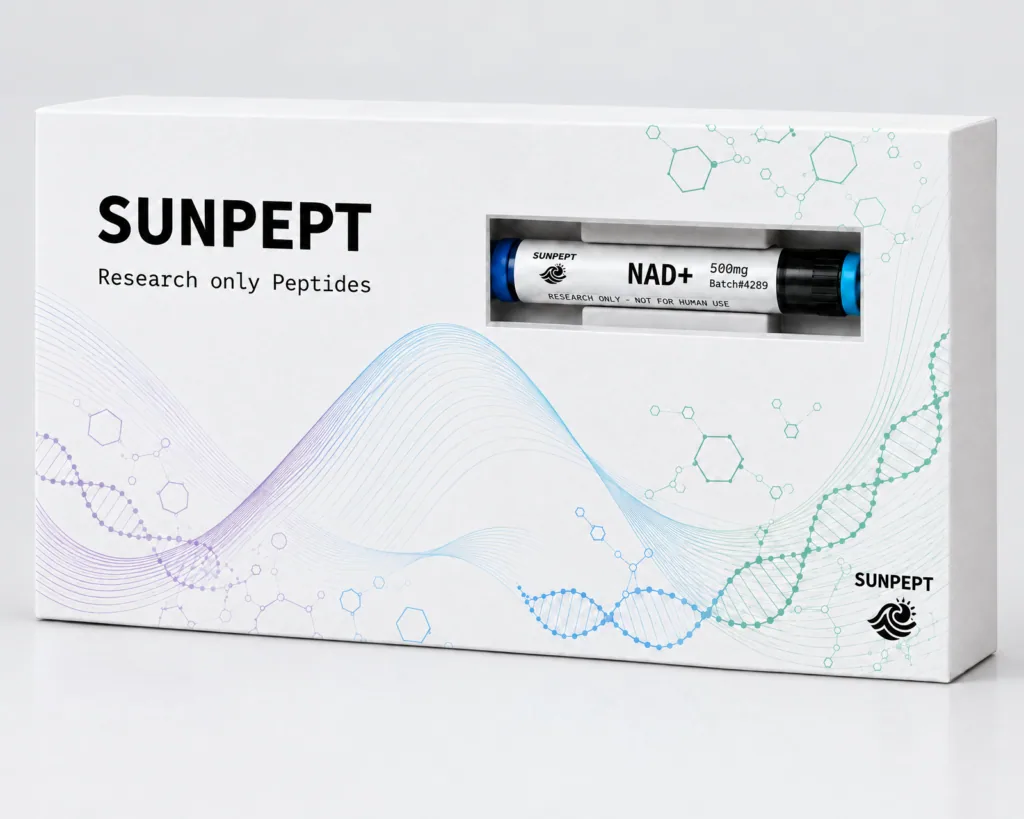
- Format: Pen with pre-dissolved substance
- Solubility: Readily soluble in water
- Storage: At −20 °C, protected from light and dry
In the Pen format, the substance is supplied already dissolved. Store refrigerated (2–8 °C) and protected from light; shelf life details depend on the substance and should be defined in the study protocol.
| Name | NAD+ — Pen |
| Format | Pen – substance already dissolved |
| Analysis reports | 4 × Janoshik Analytical (linked) |
| SKU | SP-NAD-PEN |
| Storage recommendation | 2–8 °C, protected from light |
Questions about NAD+ — Pen
Yes – 4 analysis reports from Janoshik Analytical (HPLC/MS) are linked on this page. They refer to the specific sample tested.
In the Pen, the substance is supplied already dissolved. For a comparison with the Vial format, see our Journal article “Vial vs. Pen.”
Shipped within 24–48 hours after receipt of payment from the EU in neutral packaging — to 25 EU countries.
Exclusively for researchers and laboratory users. Not for human or veterinary use, not as a medicinal product, food, or cosmetic.