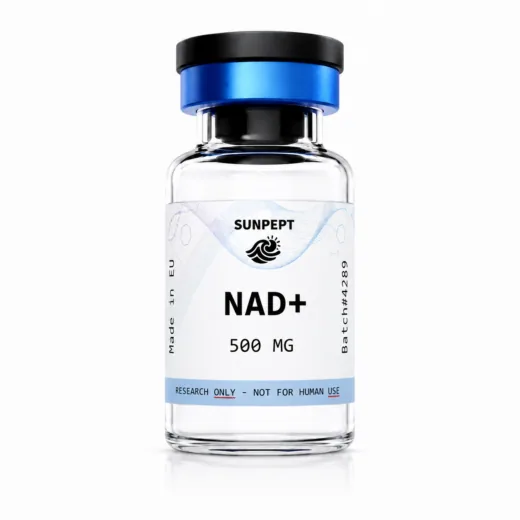
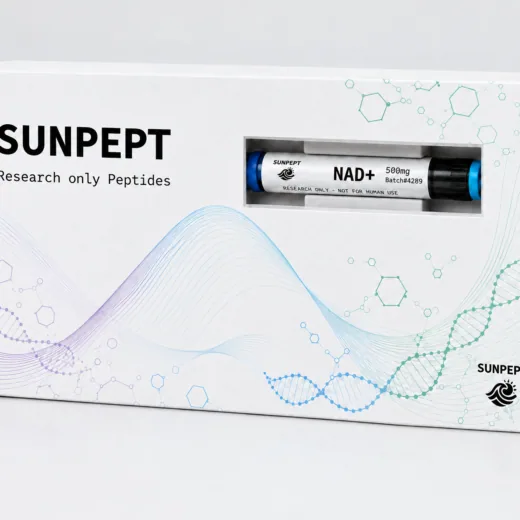
NAD+ — sirtuin substrate · PARP cofactor · mitochondrial function
Nicotinamide adenine dinucleotide (NAD+) — one of the most intensively studied molecules in the biology of aging. As Vial (lyophilized) or Pen, Janoshik reports linked.
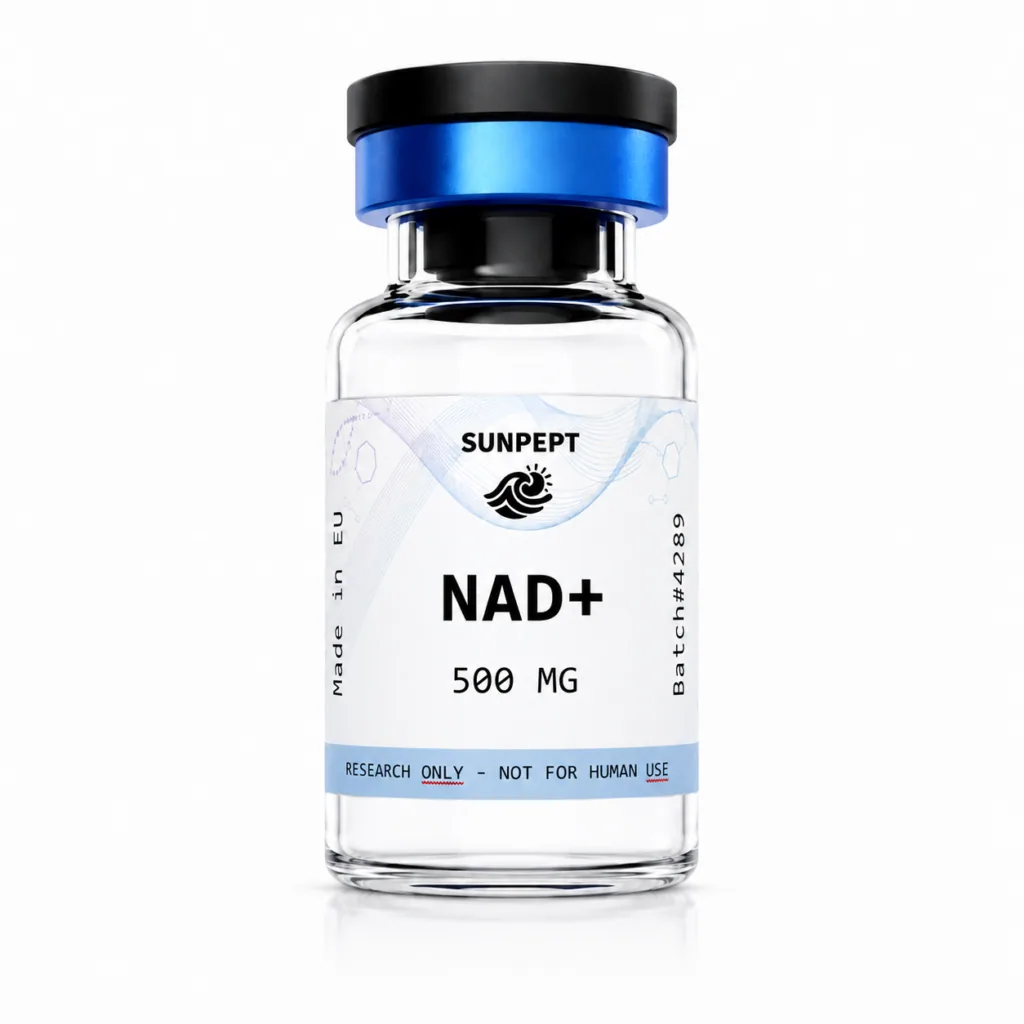
NAD+ is a cofactor in >500 metabolic reactions and a substrate for sirtuins and PARPs. The age-related decline in NAD+ is a central topic of longevity research.
SIRT1 and SIRT3 deacetylate histone proteins while consuming NAD+ and regulate gene expression in energy and stress response pathways (Guarente, Cell 2011).
NAD+ is an essential cofactor for complex I of the electron transport chain. Reduced levels correlate with mitochondrial dysfunction in aging models (Gomes et al., Cell 2013).
PARP-1 consumes NAD+ during DNA single-strand break repair. Chronically elevated PARP activity can contribute to NAD+ depletion (Bai & Canto, Cell Metab 2012).
CD38 is the main hydrolase for NAD+ and increases with age. The influence of CD38 on NAD+ levels is being investigated in mouse models (Camacho-Pereira et al., Cell Metab 2016).
As Vial or Pen. Analysis reports shown per product. Shipping to 25 EU countries, 24–48 h after receipt of payment.
Selected peer-reviewed publications on which research in this area is based.
2013 · Cell
Declining NAD+ Induces a Pseudohypoxic State Disrupting Nuclear-Mitochondrial Communication
2012 · Cell Metab
The Role of PARP-1 and PARP-2 Enzymes in Metabolic Regulation and Disease
2015 · Science
NAD+ in aging, metabolism, and neurodegeneration
In-depth articles on compounds and mechanisms in this research area.
What is NAD+? Structure, biosynthesis, sirtuins, PARPs, and CD38, the age-associated NAD+ decline described in studies, and how it differs from NMN and NR…
Read more → JournalPeptides explained simply: amino acids, the peptide bond, how peptides differ from proteins, synthesis via SPPS, analysis with HPLC and MS, and the difference between cosmetic and…
Read more →All products on SunPept are intended exclusively for scientific research and laboratory purposes (Research Use Only). They are not for human or veterinary use, not for consumption, and not intended for therapeutic purposes.
I do not agree