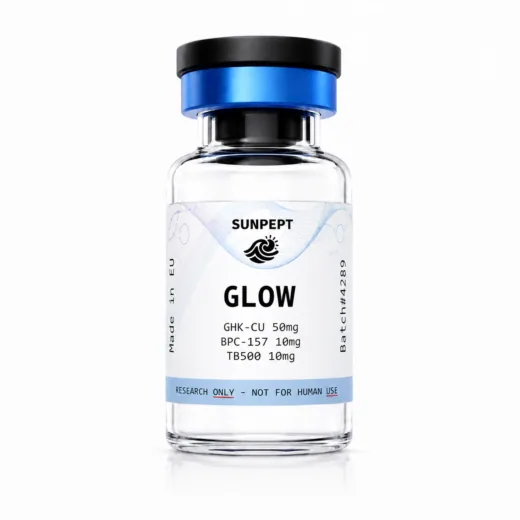
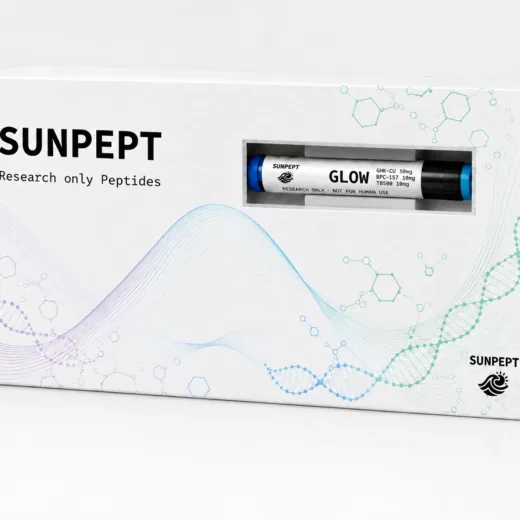
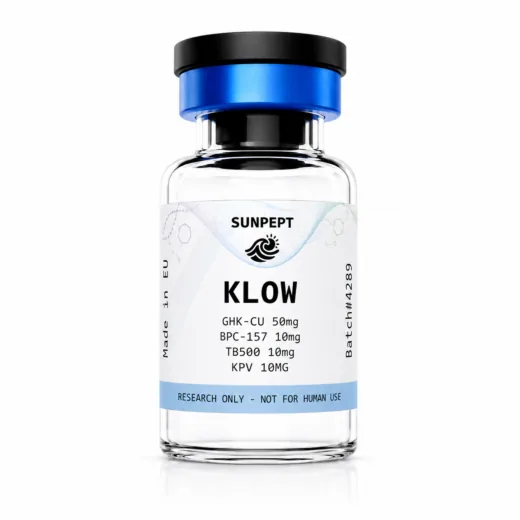
BPC-157 · GHK-Cu · TB-500 · KPV
Multi-component research compounds for studies on matrix biology, angiogenesis signaling, and cell migration in cell and tissue models.
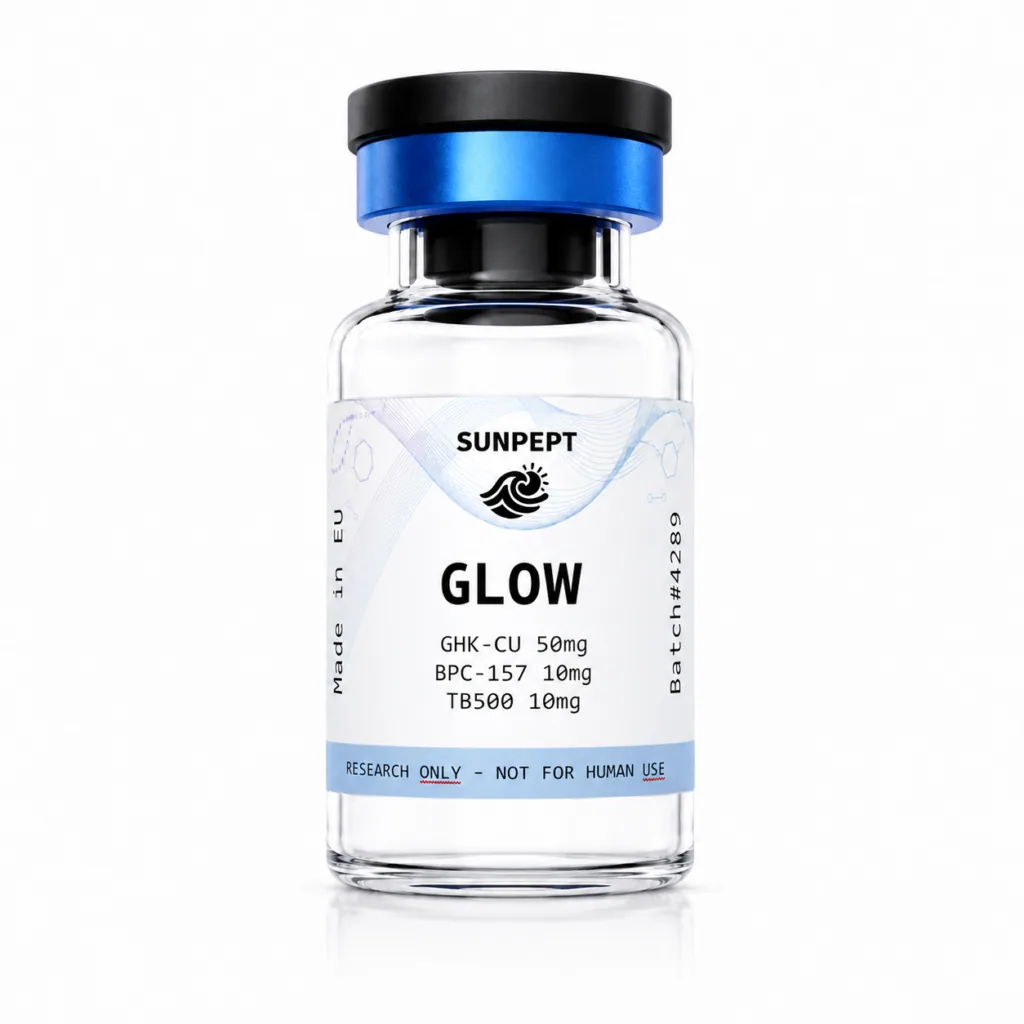
The peptides summarized here are investigated in preclinical models in the context of matrix biology, vascular signaling, and cell migration.
In cell culture models, GHK-Cu modulates MMP-1/2 and collagen I/III biosynthesis in fibroblasts (Pickart & Margolina, IJMS 2018).
BPC-157 is investigated in preclinical models in the context of VEGFR2 signaling (Hsieh et al., J Mol Med 2017).
TB-500 refers to the acetylated thymosin β4 fragment Ac-LKKTETQ (amino acids 17–23), which contains the actin-binding region; it is studied in cell migration models (Goldstein et al., Expert Opin Biol Ther 2012).
KPV (α-MSH C-terminus) is investigated in MC1R/MC3R models in the context of cytokine signaling (Luger & Brzoska, Ann NY Acad Sci 1999).
As Vial or Pen. Analysis reports shown per product. Shipping to 25 EU countries, 24–48 h after receipt of payment.
Selected peer-reviewed publications on which research in this area is based.
2018 · Int J Mol Sci
GHK-Cu peptide and new gene data (review)
2018 · Curr Pharm Des
Stable Gastric Pentadecapeptide BPC 157 – review
2012 · Expert Opin Biol Ther
Thymosin β4 – review of basic properties
In-depth articles on compounds and mechanisms in this research area.
TB-500 is the acetylated fragment 17–23 of thymosin β4. Structure, actin biology, preclinical findings, state of the evidence, and WADA status – clearly separated from the parent protein.
Read more → JournalGLOW (GHK-Cu, BPC-157, TB-500) and KLOW (+ KPV): composition, differences, the research logic of multi-component approaches, and why no synergy has been demonstrated.
Read more → JournalBPC-157 research overview: pentadecapeptide from a gastric juice protein, preclinical models, lack of clinical trials, WADA status S0 – with verified primary sources.
Read more →All products on SunPept are intended exclusively for scientific research and laboratory purposes (Research Use Only). They are not for human or veterinary use, not for consumption, and not intended for therapeutic purposes.
I do not agree