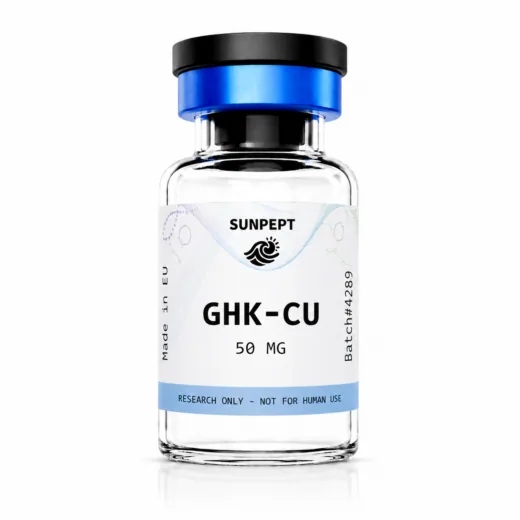
GHK-Cu — copper peptide · collagen I/III synthesis · fibroblast activity
GHK-Cu (glycyl-L-histidyl-L-lysine copper, CAS 89030-95-5) is one of the most intensively studied copper peptides in basic dermatological research.
In 2018, Pickart & Margolina described transcriptomic findings on the expression of over 4,000 human genes by GHK-Cu — an extensive dataset for basic research.
In fibroblast cultures, the influence of GHK-Cu on the expression of collagen types I and III is being investigated. Pickart & Margolina (IJMS 2018) report corresponding gene upregulation in transcriptome analyses.
GHK-Cu influences the balance between matrix metalloproteinases (MMP-1, MMP-2) and inhibitors (TIMP-1, TIMP-2) — investigated in cell models.
Transcriptome data describe expression changes in superoxide dismutase (SOD) and antioxidant enzyme systems; the role of copper complexation is being investigated in vitro.
In more recent in vitro findings, GHK-Cu shows an influence on Wnt signaling and epidermal stem cell pools — an area of active basic research without clinical human studies.
As Vial or Pen. Analysis reports shown per product. Shipping to 25 EU countries, 24–48 h after receipt of payment.
Selected peer-reviewed publications on which research in this area is based.
2018 · Int J Mol Sci
GHK-Cu peptide and new gene data (review)
2008 · J Biomater Sci Polym Ed
The Human Tri-Peptide GHK and Tissue Remodeling
In-depth articles on compounds and mechanisms in this research area.
GHK-Cu is the copper complex of the tripeptide Gly-His-Lys. Structure, discovery, preclinical findings, cosmetics context, and safety data – objective and with primary sources.
Read more → JournalPeptides explained simply: amino acids, the peptide bond, how peptides differ from proteins, synthesis via SPPS, analysis with HPLC and MS, and the difference between cosmetic and…
Read more →All products on SunPept are intended exclusively for scientific research and laboratory purposes (Research Use Only). They are not for human or veterinary use, not for consumption, and not intended for therapeutic purposes.
I do not agree