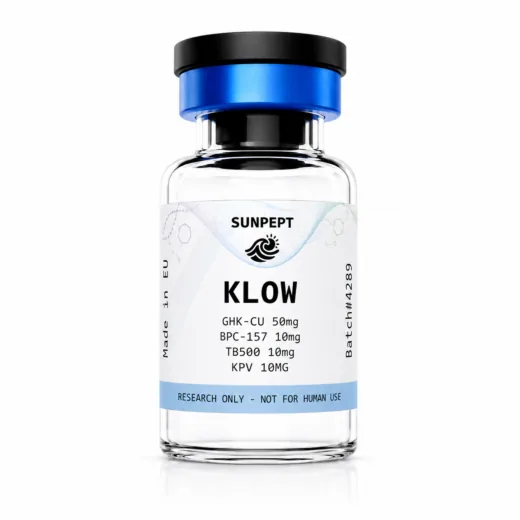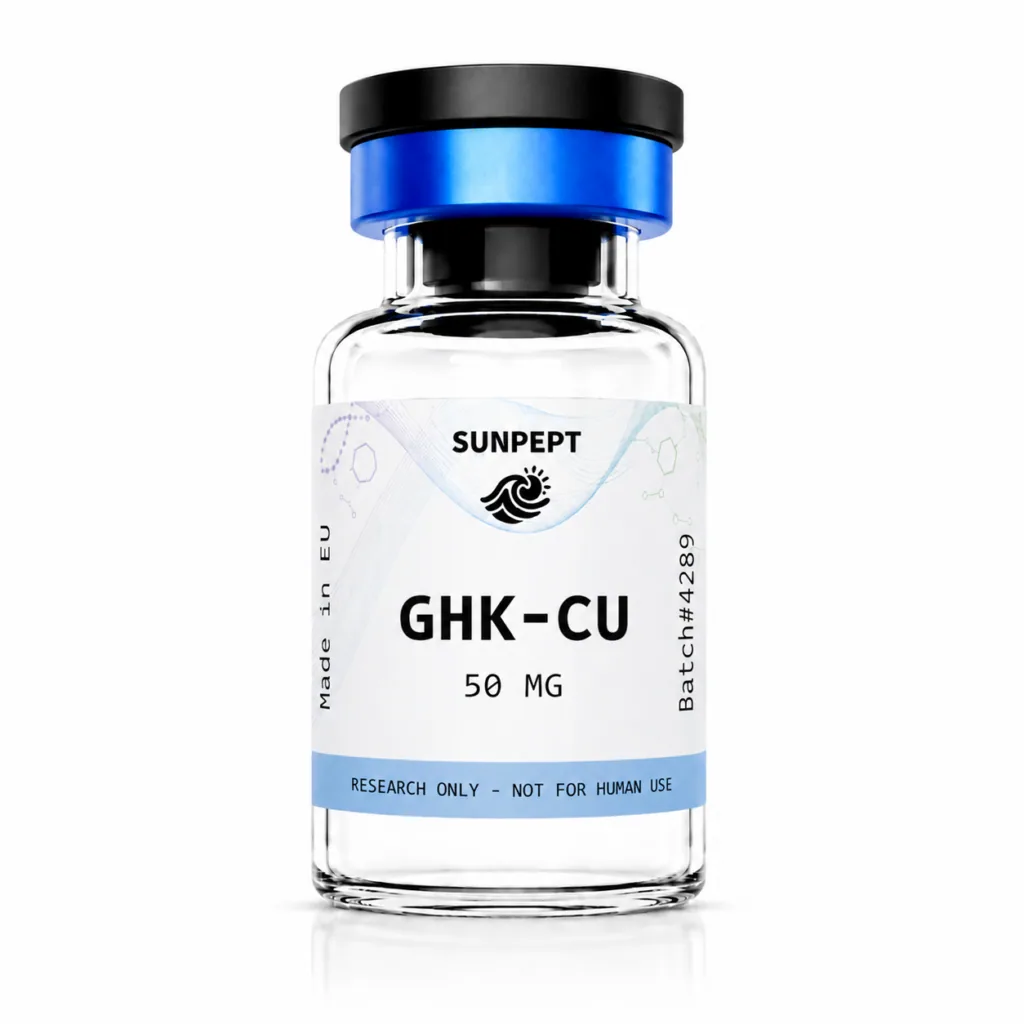
GHK-Cu — Vial
Glycyl-L-histidyl-L-lysine copper (GHK-Cu, CAS 89030-95-5) — naturally occurring tripeptide, first isolated from human plasma in 1973 (Pickart, 1973). Investigated in cell biology research with regard to fibroblast activity, collagen I/III synthesis, and growth factor expression (Pickart & Margolina, Int J Mol Sci, 2018). Freeze-dried, analysis documentation on request. Exclusively for scientific research — not for human use.
Contents: 1 × lyophilized peptide powder + 1 × bacteriostatic water (3 ml, Bac Water) for reconstitution. The bacteriostatic water is intended as a solvent for reconstituting the lyophilized peptide and is intended for research purposes only.
Free shipping from 199 €
Shipped from the EU (Czech Republic)
FOR RESEARCH USE ONLY. This product is intended exclusively for laboratory and research purposes. Not for human or animal consumption, not a medicinal product or food.
GHK-Cu (glycyl-L-histidyl-L-lysine copper; CAS no. 89030-95-5; molecular weight 402.9 g/mol) is a naturally occurring tripeptide first isolated from human plasma by Loren Pickart in 1973. The substance belongs to the class of copper-binding peptides and is investigated in basic research on the biological activity of matrix proteins and on cellular matrix processes.
Research subject and evidence
In 2018, Pickart and Margolina described in the International Journal of Molecular Sciences (DOI: 10.3390/ijms19071987), based on transcriptomic analyses, that GHK-Cu influences the expression of more than 4,000 human genes in vitro. These include genes involved in collagen I and collagen III biosynthesis, growth factor signaling (TGF-β, VEGF), and antioxidant protective mechanisms (SOD, GPx).
In 2009, Gorouhi and Maibach published in the International Journal of Cosmetic Science (DOI: 10.1111/j.1468-2494.2009.00490.x) a systematic review of peptide-based active ingredients in dermatological research. In it, GHK-Cu is classified as one of the best-characterized copper-binding tripeptides with documented fibroblast-stimulating activity in in vitro models.
In 2008, Pickart described in the Journal of Biomaterials Science (PMID: 18635998) findings on tissue remodeling processes in which GHK-Cu is associated in preclinical models with the regulation of matrix metalloproteinases (MMPs) and tissue inhibitors of metalloproteinases (TIMPs).
Compound characterization
- IUPAC name: Copper(II) [glycyl-L-histidyl-L-lysinate]
- CAS number: 89030-95-5
- Molecular formula: C₁₄H₂₂CuN₆O₄
- Molecular weight: 402.9 g/mol
- Physical state: Lyophilized powder (freeze-dried)
- Solubility: Water-soluble (≥10 mg/ml in sterile water)
- Storage: At −20 °C, protected from light; after reconstitution at 2–8 °C
In the Vial, the substance is supplied as a lyophilized (freeze-dried) powder. Storage recommendation before dissolution: −20 °C, protected from light. Included: 3 ml bacteriostatic water as a solvent for laboratory work.
Solvent, volume, and storage after dissolution are defined in the respective study protocol.
| Name | GHK-Cu — Vial |
| Format | Vial – lyophilized powder |
| Analysis reports | On request |
| SKU | SP-GHK-VIAL |
| Storage recommendation | −20 °C, protected from light |
Questions about GHK-Cu — Vial
No report is currently linked for this product. You can request analysis documentation by emailing support@sunpept.com.
Freeze-drying — the substance is supplied as a powder in the Vial and is dissolved in the lab. 3 ml bacteriostatic water is included.
Shipped within 24–48 hours after receipt of payment from the EU in neutral packaging — to 25 EU countries.
Exclusively for researchers and laboratory users. Not for human or veterinary use, not as a medicinal product, food, or cosmetic.