Retatrutide: Triple Agonist from Incretin Research
Retatrutide activates three related hormone receptors, including the GLP-1 and GIP receptors. Receptor pharmacology, comparison with tirzepatide, the TRIUMPH trial programme, safety data and approval status – with sources.

Retatrutide is a synthetic peptide developed by Eli Lilly (research code LY3437943) that acts simultaneously as an agonist at three related hormone receptors, including the GIP and GLP-1 receptors. It is therefore called a triple agonist. Retatrutide is not approved and is currently being investigated in clinical Phase 3 trials.[1][10]
In metabolic research, retatrutide is of interest mainly because it combines two incretin signalling pathways and a third, related hormone axis in a single molecule. This makes it possible to study how these three axes interact in glucose and energy metabolism – a question that mono- or dual agonists can only partially answer.
This article provides an objective overview of the state of research: receptor pharmacology, comparison with tirzepatide (Mounjaro), the trial program from Phase 1 to Phase 3, published safety data, and current approval status. At the end you'll find notes on sourcing for research and an FAQ.
At a glance
- Compound class: synthetic peptide with agonism at three hormone receptors, including the GIP and GLP-1 receptors (triple agonist).[1]
- Developer: Eli Lilly and Company, research code LY3437943.[1]
- Pharmacokinetics: A half-life of approximately six days was reported in the Phase 1b trial.[1]
- Clinical development: Phase 2 trials published in 2023; Phase 3 programs TRIUMPH and TRANSCEND with first publications in 2026.[4][7][8]
- Most frequently reported adverse events: gastrointestinal (including nausea, diarrhea, vomiting, constipation).[4][5]
- Approval: As of October 2026, not approved by any medicines regulator.[10]
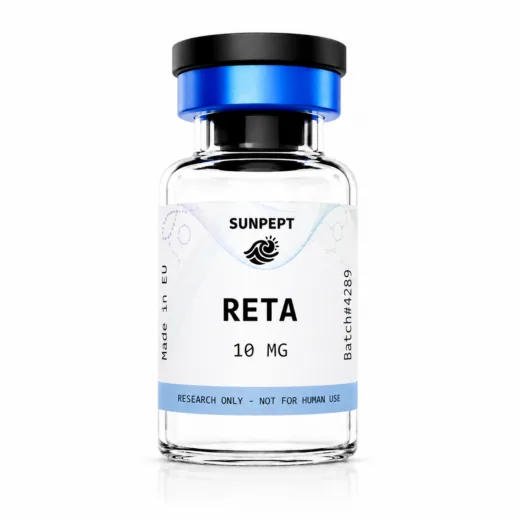
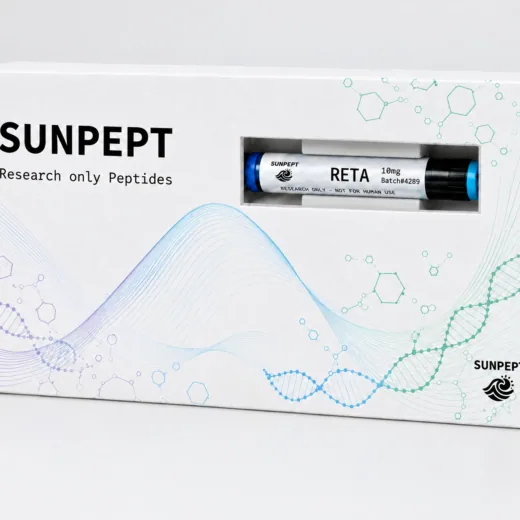
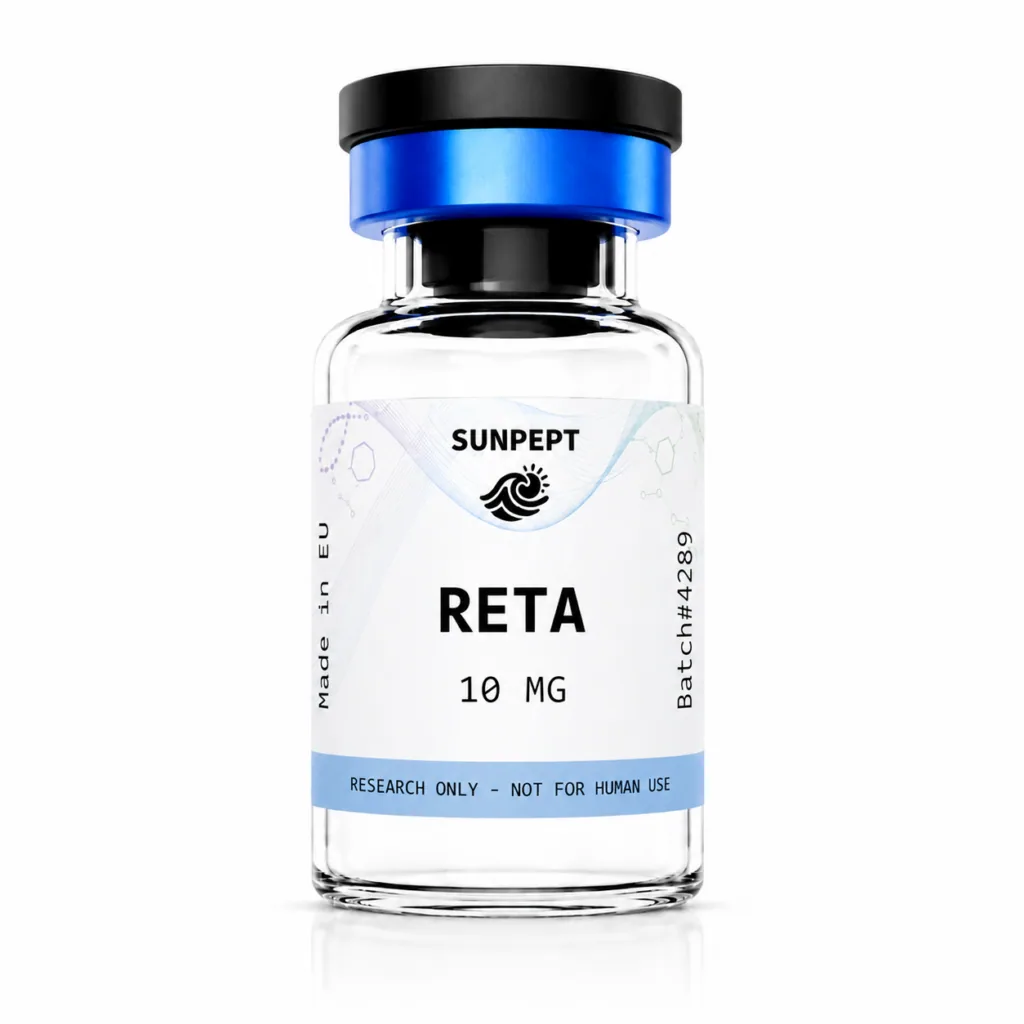
- At SunPept: as a lyophilized vial or pre-dissolved pen, for research purposes only.
What is Retatrutide?
Retatrutide belongs to the group of so-called multi-receptor agonists. These are single peptide molecules that activate several related hormone receptors. The three target receptors of retatrutide, including GIPR and GLP-1R, all belong to the class B family of G protein-coupled receptors. Their natural ligands are structurally closely related peptide hormones. It is precisely this relationship that makes it possible to design a single sequence that shows agonist activity at all three receptors.[1][2]
The first clinical characterization in humans was published in 2022 in The Lancet : a Phase 1b multiple-ascending-dose trial in adults with type 2 diabetes. The primary endpoint was safety and tolerability; pharmacokinetics and pharmacodynamics were investigated as secondary endpoints. The authors reported dose-proportional pharmacokinetics and a half-life of about six days.[1]
For research, Retatrutide is thus a tool for investigating the combined activation of three receptors – for example in cell models, in receptor pharmacology, or in analytical questions. You can find an overview of related compounds in the section Metabolic Research.
Mechanism of action: what research shows about triple agonism
To understand the mechanism of Retatrutide, it helps to look at the three signaling axes individually. All three receptors preferentially couple to the G protein Gs and raise intracellular cAMP levels upon activation. They differ mainly in the tissues in which they are expressed and the physiological processes they regulate.[2]
GLP-1 receptor (GLP-1R)
GLP-1 is an incretin hormone released in the gut after food intake. In the pancreas, GLP-1R activation mediates glucose-dependent insulin secretion. In addition, GLP-1R agonism delays gastric emptying. For Retatrutide, such a delay in gastric emptying was described in a separate analysis.[9]
GIP receptor (GIPR)
GIP is the second classic incretin. The GIP receptor is also involved in glucose-dependent insulin secretion and is additionally expressed in other tissues, such as adipose tissue. The significance of GIPR agonism combined with GLP-1R agonism has been studied intensively, above all using tirzepatide as an example.[3]
The third receptor axis
The third target receptor of retatrutide also belongs to the class B family and is expressed mainly in the liver. At this axis, research investigates signalling pathways of hepatic glucose and lipid metabolism, amino acid metabolism and energy expenditure.[2] The research approach consists of combining this axis with the insulinotropic incretin components in a single molecule.
| Receptor | Natural ligand | Key research topics |
|---|---|---|
| GLP-1R | GLP-1 (incretin) | glucose-dependent insulin secretion, gastric emptying |
| GIPR | GIP (incretin) | insulin secretion, signaling pathways in adipose tissue |
| third class B receptor | Peptide hormone from the pancreas | hepatic glucose and lipid metabolism, energy expenditure |
Retatrutide vs. tirzepatide (Mounjaro): the mechanistic comparison
One of the most common search queries is “Retatrutide vs. Mounjaro”. Mounjaro is the brand name of tirzepatide, which is approved as a medicinal product in the EU. Both molecules come from Eli Lilly but differ in their receptor pharmacology. A serious comparison can therefore only refer to the mechanism, not to efficacy in humans.
Dual vs. triple agonism
Tirzepatide (LY3298176) is a dual agonist at the GIP and GLP-1 receptors. In a pharmacological analysis, tirzepatide was described as an “imbalanced” agonist: at clinically relevant concentrations, it showed greater occupancy of the GIP receptor than of the GLP-1 receptor. At the GLP-1 receptor, so-called “biased agonism” was also observed – cAMP generation was favored over β-arrestin recruitment.[3] Retatrutide extends this principle by a third receptor axis.[1]
| Feature | Tirzepatide (Mounjaro) | Retatrutide |
|---|---|---|
| Research code | LY3298176 | LY3437943 |
| Receptors | GIPR, GLP-1R | GIPR, GLP-1R + a third receptor |
| Agonist type | dual | triple |
| Third receptor axis | no | yes |
| Status (as of October 2026) | approved in the EU | not approved, Phase 3 |
Is there a direct comparison in studies?
The ClinicalTrials.gov registry lists a Phase 3 trial that directly compares Retatrutide with tirzepatide (TRIUMPH-5, NCT06662383). According to the registry, this trial had not yet been completed as of October 2026; no published comparative results are therefore available. Statements such as “Retatrutide is stronger than Mounjaro” are therefore not scientifically supported.
Evidence: from Phase 1 to the Phase 3 program TRIUMPH
For a molecule that is not yet approved, the clinical development of Retatrutide is comparatively well documented. The following sections summarize trial designs and the metabolic endpoints investigated.
Phase 1b (2022)
The Phase 1b trial investigated safety, pharmacokinetics, and pharmacodynamics over twelve weeks in adults with type 2 diabetes. Placebo and the GLP-1 receptor agonist dulaglutide served as comparators. Reported findings included changes in mean plasma glucose and HbA1c in the higher dose groups compared with placebo.[1]
Phase 2 (2023)
Two Phase 2 trials were published in 2023. The trial published in The Lancet in people with type 2 diabetes was randomized, double-blind, and placebo- and active-controlled (dulaglutide). The primary endpoint was the change in HbA1c after 24 weeks. It was reported that HbA1c decreased more in all Retatrutide groups except the lowest dose group than with placebo.[4] A second Phase 2 trial was published in the New England Journal of Medicine ; it ran for 48 weeks and systematically collected safety data in addition to the protocol-specified endpoints.[5]
Phase 3: TRIUMPH and TRANSCEND
The Phase 3 program is divided into several trial series. According to the published study design, the TRIUMPH program consists of four randomized, double-blind, placebo-controlled core trials with a total of more than 5,800 participants. A special feature is the so-called basket design: sub-protocols on obstructive sleep apnea (endpoint: apnea-hypopnea index) and knee osteoarthritis (endpoint: WOMAC pain scale) are embedded within the main trials; TRIUMPH-3 includes participants with cardiovascular disease.[6] According to ClinicalTrials.gov, TRIUMPH-1 through TRIUMPH-4 have been completed; further TRIUMPH trials are still ongoing.
In parallel, the TRANSCEND program is investigating Retatrutide in type 2 diabetes. Its first Phase 3 publication, TRANSCEND-T2D-1 (The Lancet, 2026), was a 40-week, double-blind, placebo-controlled trial with 537 randomized participants. The primary endpoint was the change in HbA1c; significant differences versus placebo were reported for all three Retatrutide groups.[7] Also in 2026, TRIUMPH-2 was published in The Lancet , a Phase 3 trial with 1,152 randomized adults with type 2 diabetes over 80 weeks.[8]
| Trial | Phase | Population | Primary focus (selection) |
|---|---|---|---|
| Urva et al. 2022 | 1b | Type 2 diabetes | Safety, pharmacokinetics |
| Rosenstock et al. 2023 | 2 | Type 2 diabetes | HbA1c after 24 weeks |
| Jastreboff et al. 2023 | 2 | Adults, 48 weeks | metabolic endpoints, safety |
| TRANSCEND-T2D-1 (2026) | 3 | Type 2 diabetes | HbA1c after 40 weeks |
| TRIUMPH-2 (2026) | 3 | Type 2 diabetes | metabolic endpoints, safety |
Safety data from studies
The following information solely reflects which adverse events were reported in published studies. It is not an assessment and makes no statement about use outside of controlled clinical trials.
- Gastrointestinal events: They were the most frequently reported category in all published studies. In the Phase 2 trial in type 2 diabetes, mild to moderate events such as nausea, diarrhea, vomiting, and constipation were reported in 35% of participants in the Retatrutide groups, compared with 13% with placebo and 35% with dulaglutide.[4] In the NEJM trial, they were described as dose-dependent and mostly mild to moderate.[5]
- Heart rate: In the NEJM Phase 2 trial, dose-dependent increases in heart rate were reported that peaked at 24 weeks and declined thereafter.[5]
- Hypoglycemia: No severe hypoglycemia was reported in the Phase 2 trial in type 2 diabetes or in TRANSCEND-T2D-1.[4][7]
- Hypotension and dysesthesia: In TRIUMPH-2, these events occurred more frequently with Retatrutide than with placebo.[8]
- Trial discontinuations: In TRANSCEND-T2D-1, 2–5% of participants on Retatrutide discontinued treatment due to adverse events (placebo: 0%).[7] In TRIUMPH-2, discontinuations due to adverse events were more frequent in the higher dose groups than with placebo.[8]
Overall, the study authors describe the safety profile as comparable to that of other molecules with GLP-1 receptor agonism.[7][8] Important for context: all data come from controlled trials with medical supervision and a pharmaceutically manufactured investigational product.
Approval status: where is Retatrutide approved?
As of October 2026, Retatrutide has not been approved by any medicines regulator – neither by the EMA nor by the US FDA. On its website, Eli Lilly explicitly describes Retatrutide as an investigational medication whose safety and efficacy continue to be studied in clinical trials.[10] In addition, Lilly has registered a pre-approval access program in the trial registry (“Pre-approval Expanded Access”, NCT07629401). Such a program is not an approval.
For research sourcing, this means: Retatrutide is available as a research chemical but is not a medicinal product. The legal classification of sourcing depends on the substance, the country, and the intended use. You can find a neutral overview in the article on the legal status of research peptides in Germany – it is not a substitute for legal advice.
Dosing: is there information for research?
No. SunPept supplies Retatrutide exclusively as a Research Use Only compound. We provide no information on dosages, administration, reconstitution volumes, or cycles. The dose levels used in clinical trials are part of medically supervised study protocols and cannot be transferred to other contexts. In laboratory research, the respective experimental protocol defines the parameters.
Sourcing for research: vial, pen, and analysis reports
SunPept offers Retatrutide in two formats, each with 10, 20, or 30 mg total content:
- Retatrutide Vial: lyophilized (freeze-dried) powder, contents include 3 ml of bacteriostatic water.
- Retatrutide Pen: compound already dissolved, for standardized handling in laboratory workflows.
How the two formats differ in storage and handling is explained in the article Vial vs. Pen. For both Retatrutide formats, analysis reports from the independent laboratory Janoshik are linked on the respective product page. Shipping is from the Czech Republic to 25 EU countries; payment is by prepayment, and at checkout you confirm the exclusive research purpose. Current prices can be found on the product pages, as they may change.
Frequently asked questions
What is Retatrutide?
Retatrutide (LY3437943) is a synthetic peptide from Eli Lilly that acts as an agonist at three related hormone receptors, including the GIP and GLP-1 receptors. It is therefore referred to as a triple agonist. The compound is in clinical Phase 3 trials and, as of October 2026, has not been approved by any medicines regulator.
What is the difference between Retatrutide and Mounjaro?
Mounjaro (tirzepatide) is a dual agonist at the GIP and GLP-1 receptors and is approved in the EU. Retatrutide additionally addresses a third receptor axis and is not approved. A direct Phase 3 comparison trial is registered but, according to the registry, had not yet been completed in October 2026. Robust comparative data in humans are therefore not yet available.
Is Retatrutide approved?
No. As of October 2026, neither the EMA nor the FDA has approved Retatrutide. The manufacturer, Eli Lilly, describes it as an investigational compound being studied in clinical trials. A registered pre-approval access program does not change this. You can follow the current trial status in the ClinicalTrials.gov registry.
Which side effects have been reported in studies?
The most frequently reported events were gastrointestinal, such as nausea, diarrhea, vomiting, and constipation, mostly mild to moderate. In addition, dose-dependent increases in heart rate were described, and in TRIUMPH-2, hypotension and dysesthesia were reported more frequently than with placebo. These data come from controlled trials and do not constitute an assessment.
Is there dosing information for Retatrutide?
No. Retatrutide is supplied exclusively for research purposes, so we provide no information on dosing, administration, or reconstitution. The dose levels used in clinical trials belong to medically supervised study protocols and are not transferable. In laboratory research, the respective experimental protocol determines the parameters.
What is the TRIUMPH program?
TRIUMPH is Eli Lilly's Phase 3 trial program for Retatrutide. According to the published design, it comprises four randomized, placebo-controlled core trials with more than 5,800 participants, some with embedded sub-protocols on sleep apnea and knee osteoarthritis. First results, for example from TRIUMPH-2, were published in 2026; further trials are still ongoing.
In which formats is Retatrutide available at SunPept?
As a lyophilized vial including 3 ml of bacteriostatic water, or as a pen with the compound already dissolved, each with 10, 20, or 30 mg total content. Janoshik analysis reports are linked on the product page for both formats. Supplied exclusively for research purposes, with shipping from the Czech Republic to 25 EU countries.
Sources
- Urva S, Coskun T, Loh MT, et al. Lancet. 2022;400(10366):1869–1881. doi:10.1016/S0140-6736(22)02033-5
- Müller TD, Finan B, Clemmensen C, DiMarchi RD, Tschöp MH. Physiol Rev. 2017;97(2):721–766. doi:10.1152/physrev.00025.2016
- Willard FS, Douros JD, Gabe MB, et al. Tirzepatide is an imbalanced and biased dual GIP and GLP-1 receptor agonist. JCI Insight. 2020;5(17):e140532. doi:10.1172/jci.insight.140532
- Rosenstock J, Frias J, Jastreboff AM, et al. Lancet. 2023;402(10401):529–544. doi:10.1016/S0140-6736(23)01053-X
- Jastreboff AM, Kaplan LM, Frías JP, et al. N Engl J Med. 2023;389(6):514–526. doi:10.1056/NEJMoa2301972
- Giblin K, Kaplan LM, Somers VK, et al. Diabetes Obes Metab. 2026;28(1):83–93. doi:10.1111/dom.70209
- Bajaj HS, Welch M, Shah P, et al. Lancet. 2026;407(10546):2402–2413. doi:10.1016/S0140-6736(26)00967-0
- Bellido V, le Roux CW, Ekinci EI, et al. Lancet. 2026;408(10563):1455–1472. doi:10.1016/S0140-6736(26)01861-1
- Urva S, O’Farrell L, Du Y, et al. Diabetes Obes Metab. 2023;25(9):2784–2788. doi:10.1111/dom.15167
- Eli Lilly and Company. What to know about retatrutide. lilly.com (accessed October 21, 2026). lilly.com/news/stories/what-to-know-about-retatrutide
Research Use Only: SunPept supplies Retatrutide exclusively for scientific laboratory research purposes. It is not a medicinal product, not intended for human or veterinary use, and this article contains no health or usage recommendations.
The compound from this article in the shop
Vial (lyophilized) or Pen (pre-dissolved), Janoshik analysis reports linked where available. Shipped from the EU to 25 countries. For research purposes only.